As a patient, I must have the right to know what happened to others like me
There is a paradox in the healthcare world: it is all about making individuals less sick, but individuals are not supposed to take an active role. Healthcare effectiveness has long been considered to be strictly dependent on e.g. the research and development of new drugs, the skills of doctors in recognizing diseases and the rate of manufacturing new, better medical devices. The proactivity of a person is not supposed to play a role in the game. Even the word “patient” highlights the passive role of someone who just needs to wait.
However, medical care is estimated to be responsible for only 10 to 20% of health outcomes – the rest depends mainly on what patients do. Basically, we’re currently spending trillions of dollars to optimize for medical care – but how much are we putting into understanding and improving patient journeys?
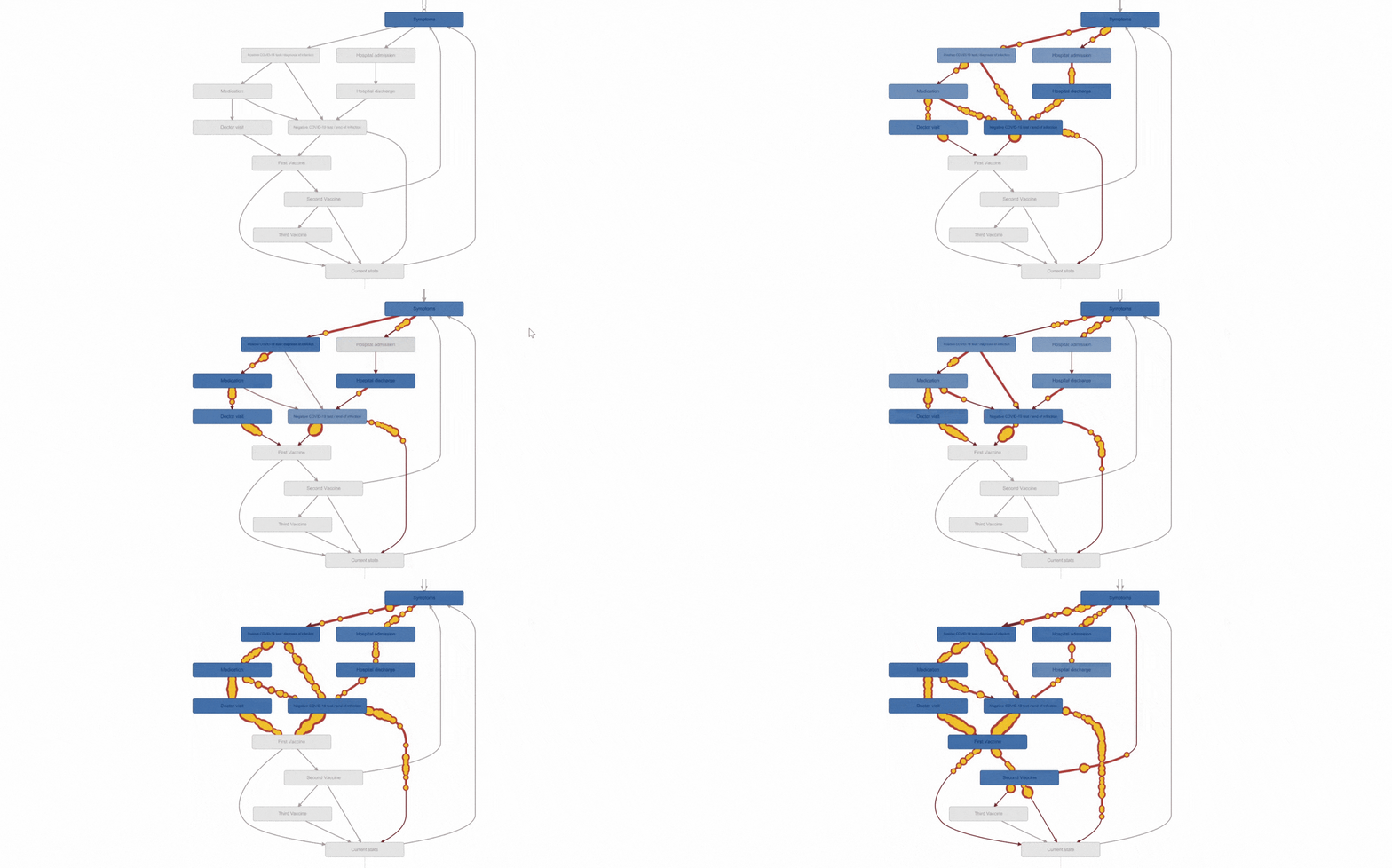
We are building mama heath to revolutionize this paradigm: mining and understanding how patient behaviors affect their health outcomes. We gather stories from individual patients and use machine learning and process mining to derive a general disease model, like this one:
What’s in it for patients?
For the first time, they can see the journey of those similar to them, what they did, how their condition evolved, and talk to them. The latter should not be underestimated: we are seeing more and more patients that come talking to others like them, open up their feelings and feel better.
Once we succeed, patients will be able to see and ideally follow their best journey. But how can we raise the bar of what “best journey” actually means?
We aim at providing healthcare companies a window to the real world, to the day-to-day challenges that compromise the journey of millions of patients – in an effort to direct some of their efforts (and money) to embrace value-based healthcare, looking at what actually matters for people.
Let me leave you with a vision
I believe individuals are those who will revolutionize health care, but in order to bring them on board, they must have access to the information they need to do so. I believe patients should have the right to see what similar others -worldwide- are doing, and ultimately play an active role in the management of their diseases.
Imagine a world in which you can access the wisdom of millions of others who dealt with your condition in the past, a world in which no one ever has to say “If only my doctor had told me that”.